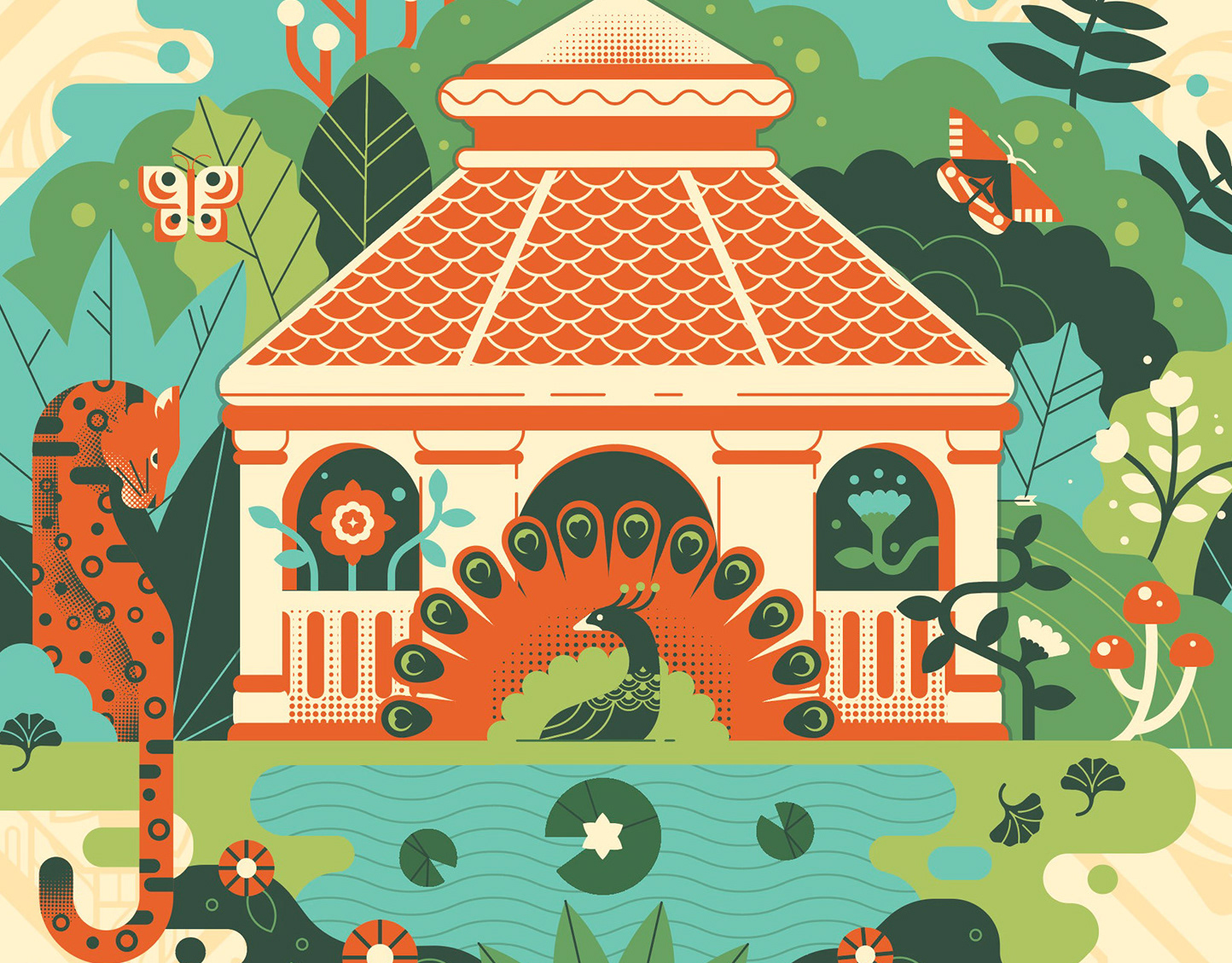
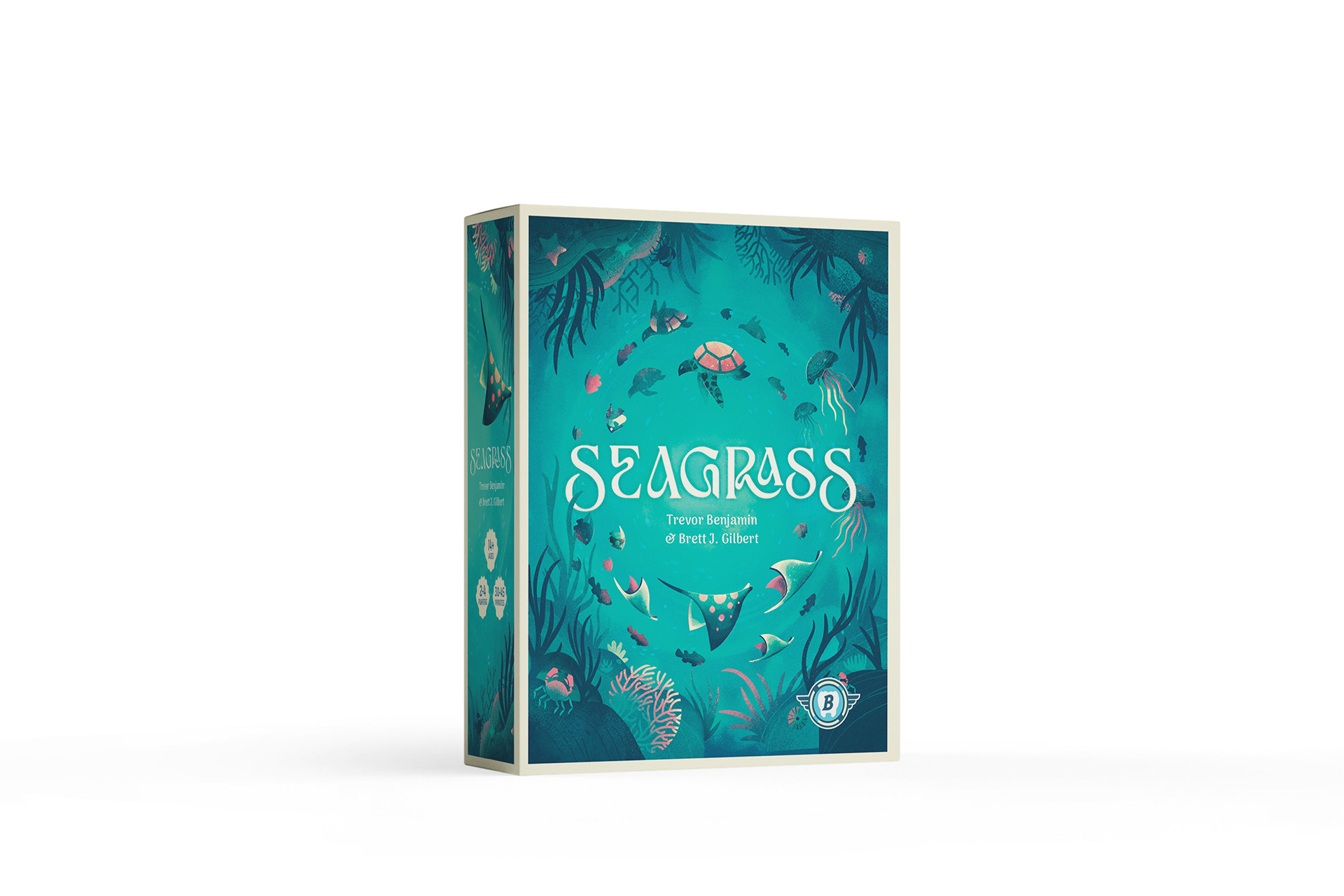
Seagrass is a strategic tile-placing game designed by Trevor Benjamin & Brett J. Gilbert, and published through Bitewing Games. After they settled on the core mechanics and theme, the blank slate was handed to me to art-direct, design, and illustrate. Seagrass was illustrated in tandem with the turtle-themed, tile-placing game Arribada.
Design Process
Seagrass is a strategic, travel-friendly game where players take on the role of marine naturalists, exploring the many reefs and colonies of creatures that thrive among these expanding and diverse “rainforests of the sea.”
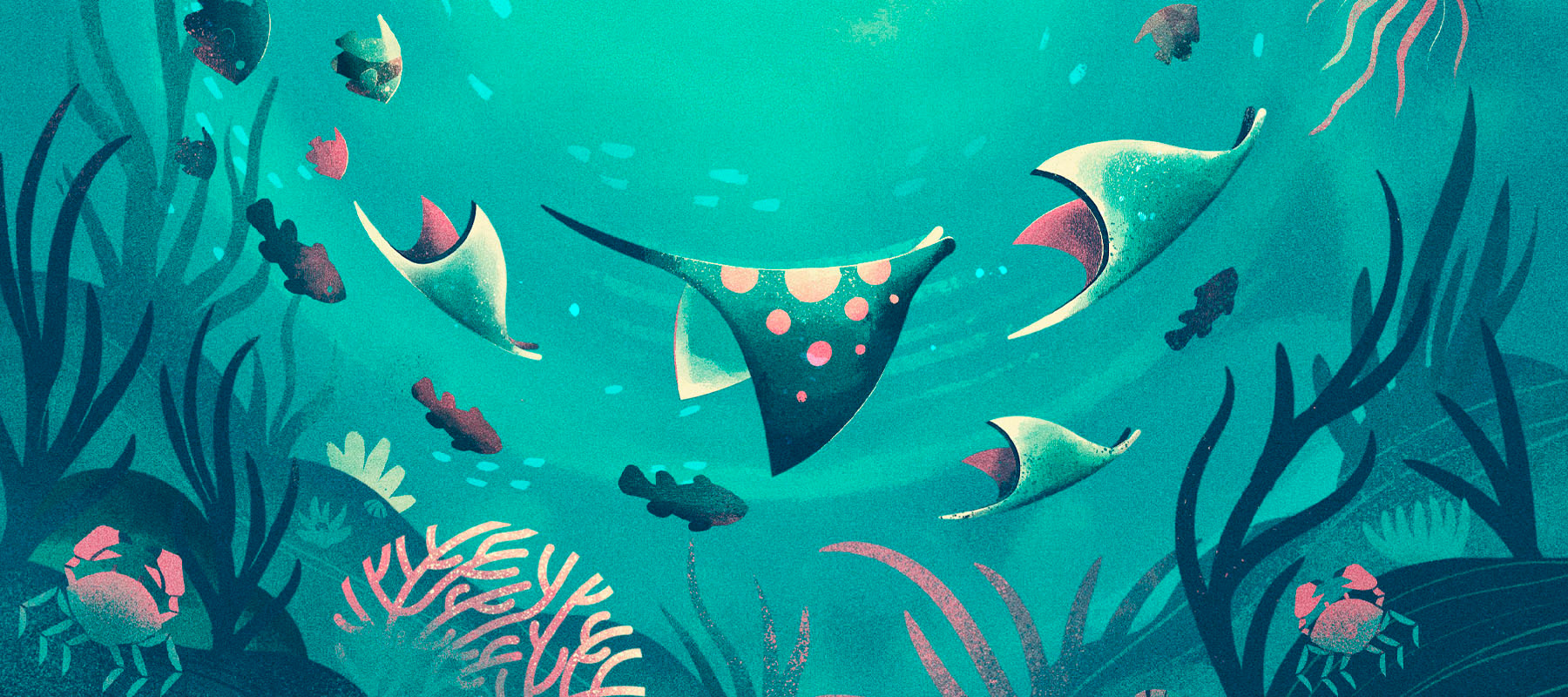
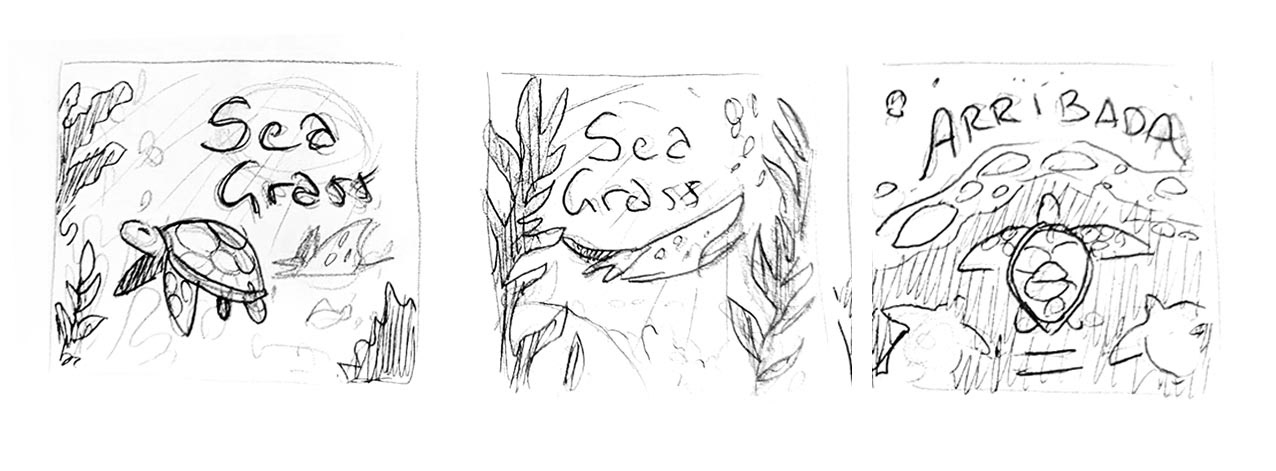
Once the hard work of developing and refining the game was completed, it was handed to me to begin the visual design process. This always begins with thumbnailing and sketching. I explored several directions and colour palettes before decided on the final cover design. Since the players are acting as underwater naturalists, I put the perspective at the bottom of a vibrant coral reef, looking up at a sea of wildlife circling around them.
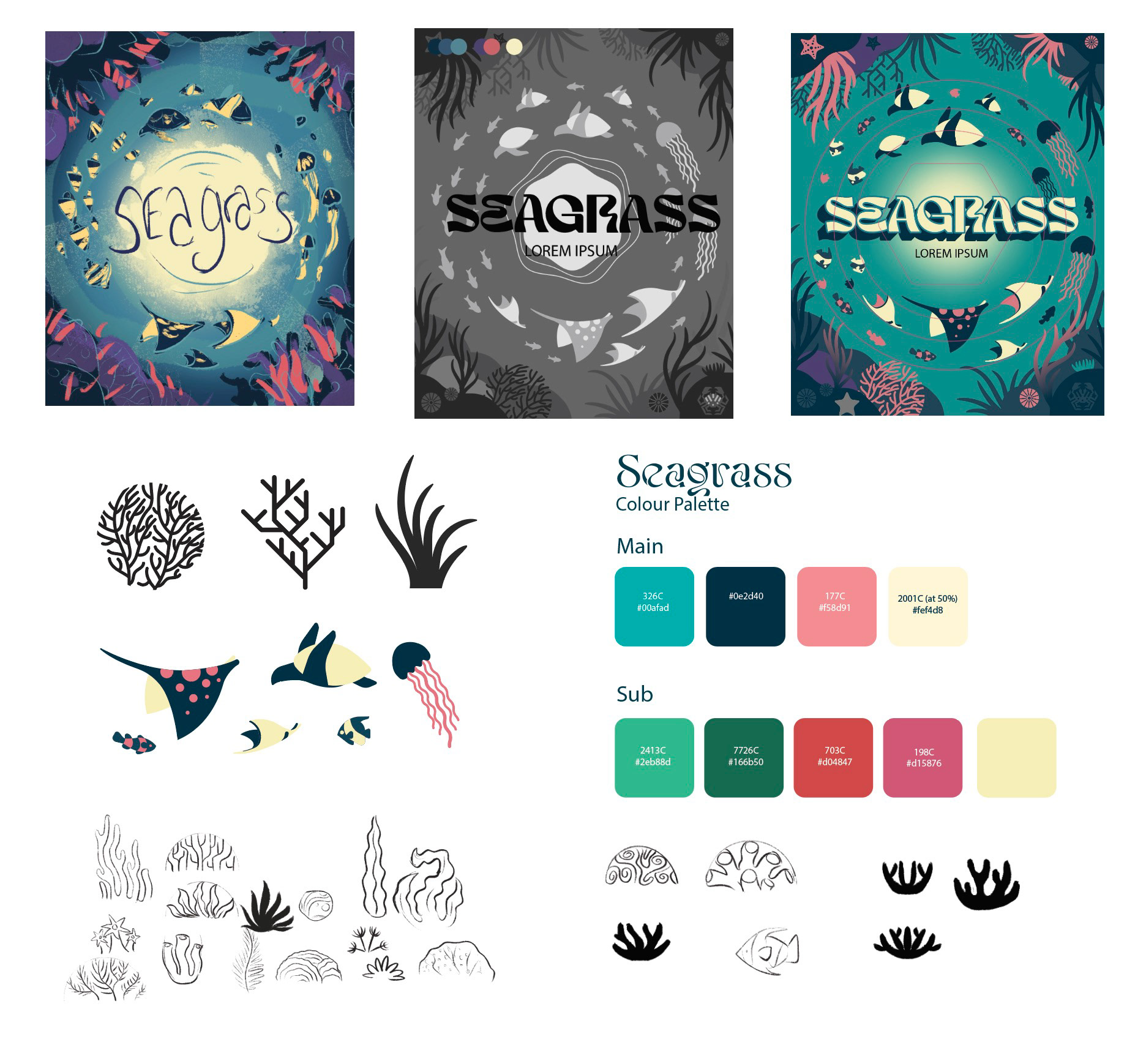
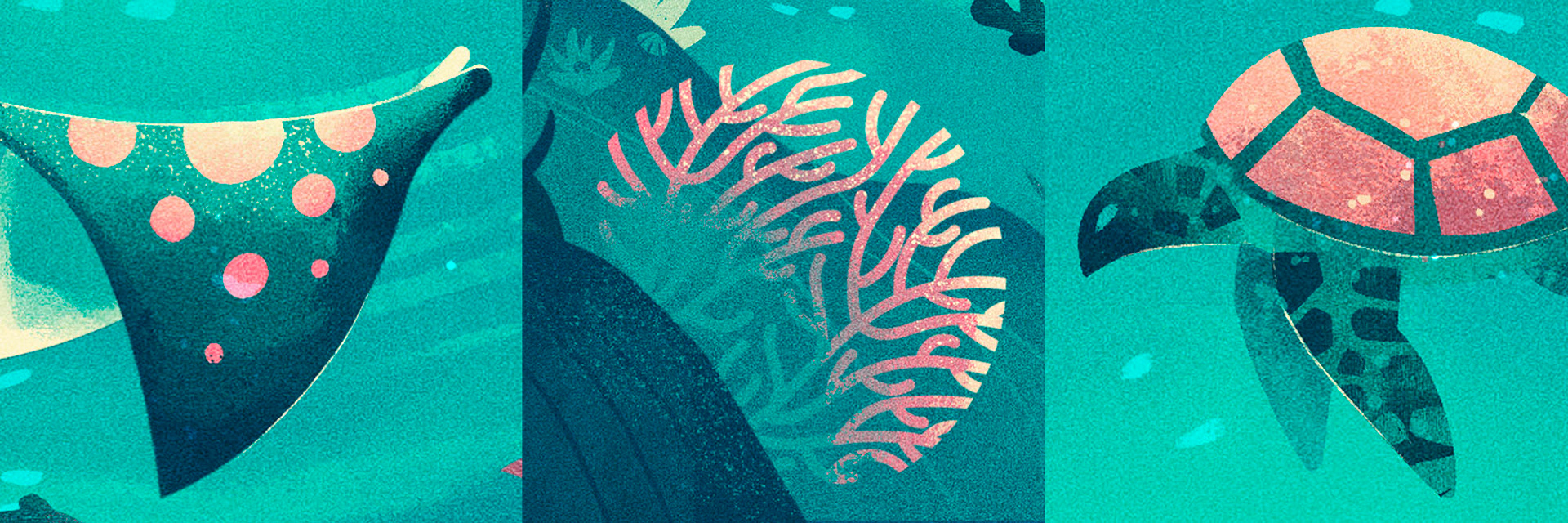
In contrast to Seagrass's sister game Arribada, which used a sandy texture for its beach-theme, I decided to use a watercolour texture to match the underwater theme. Both games compliment each other nicely, yet have their own distinct aesthetic and colour palette.
Game Tokens
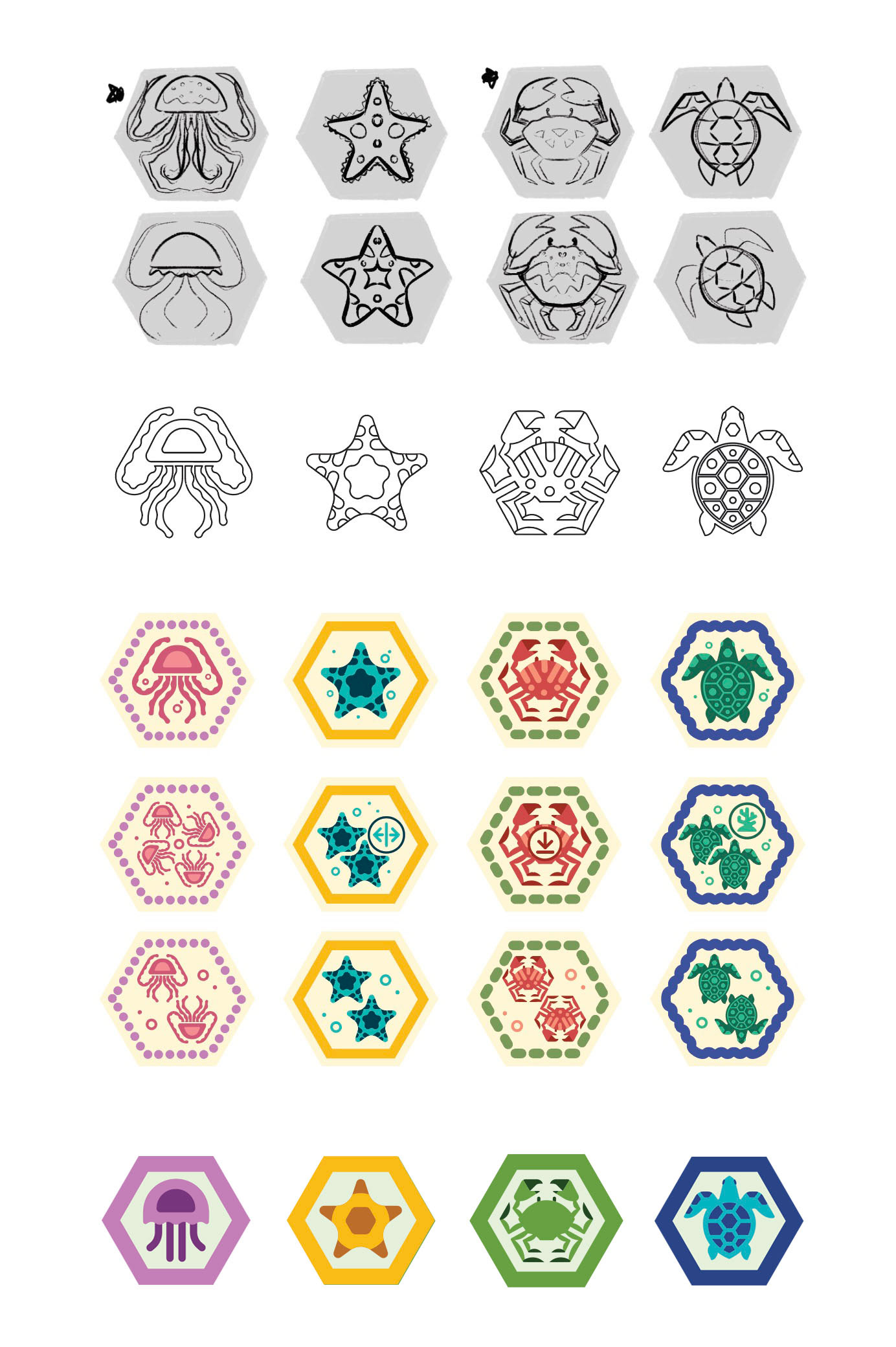
Seagrass has 140 tokens and components, all of which needed to be clearly designed for both colourblind accessibility and overall clarity. Originally each player tile came with its own player pattern along the edges, but after playtesting we simplified the designs further for visual clarity.
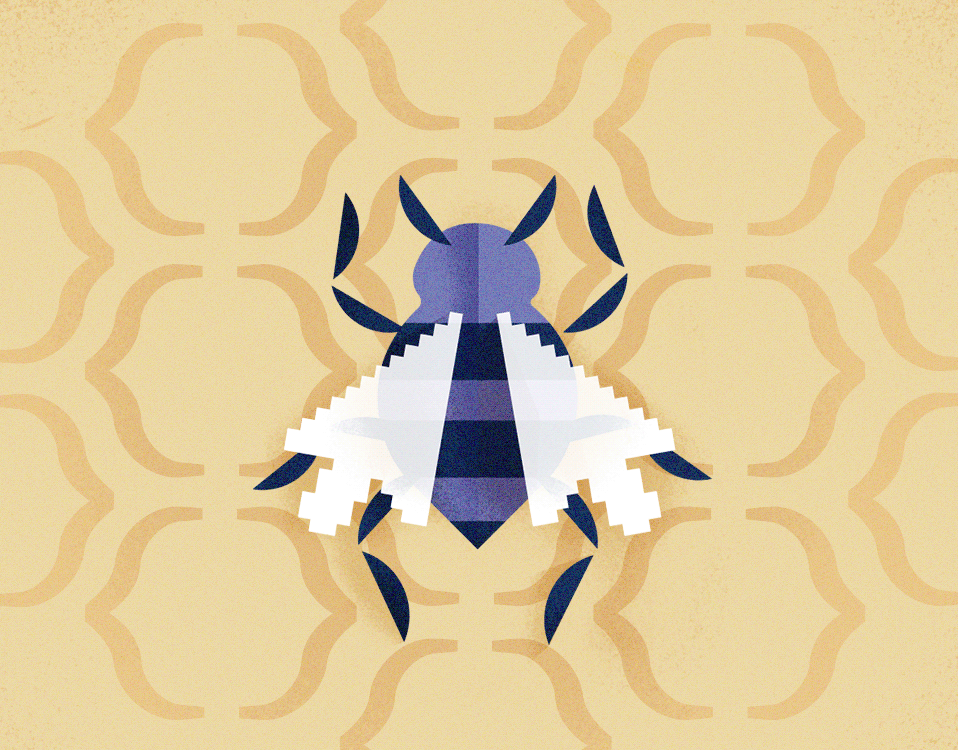
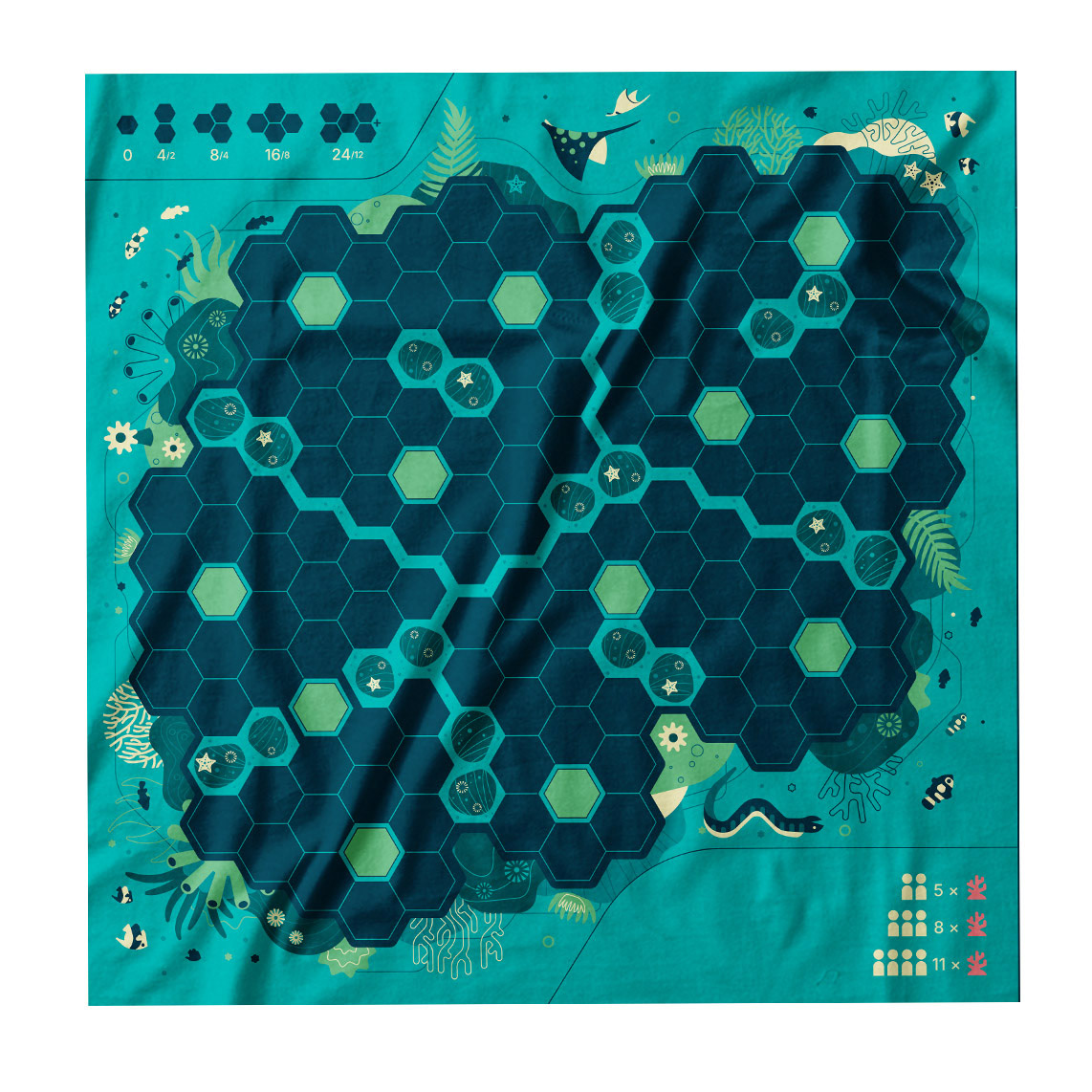
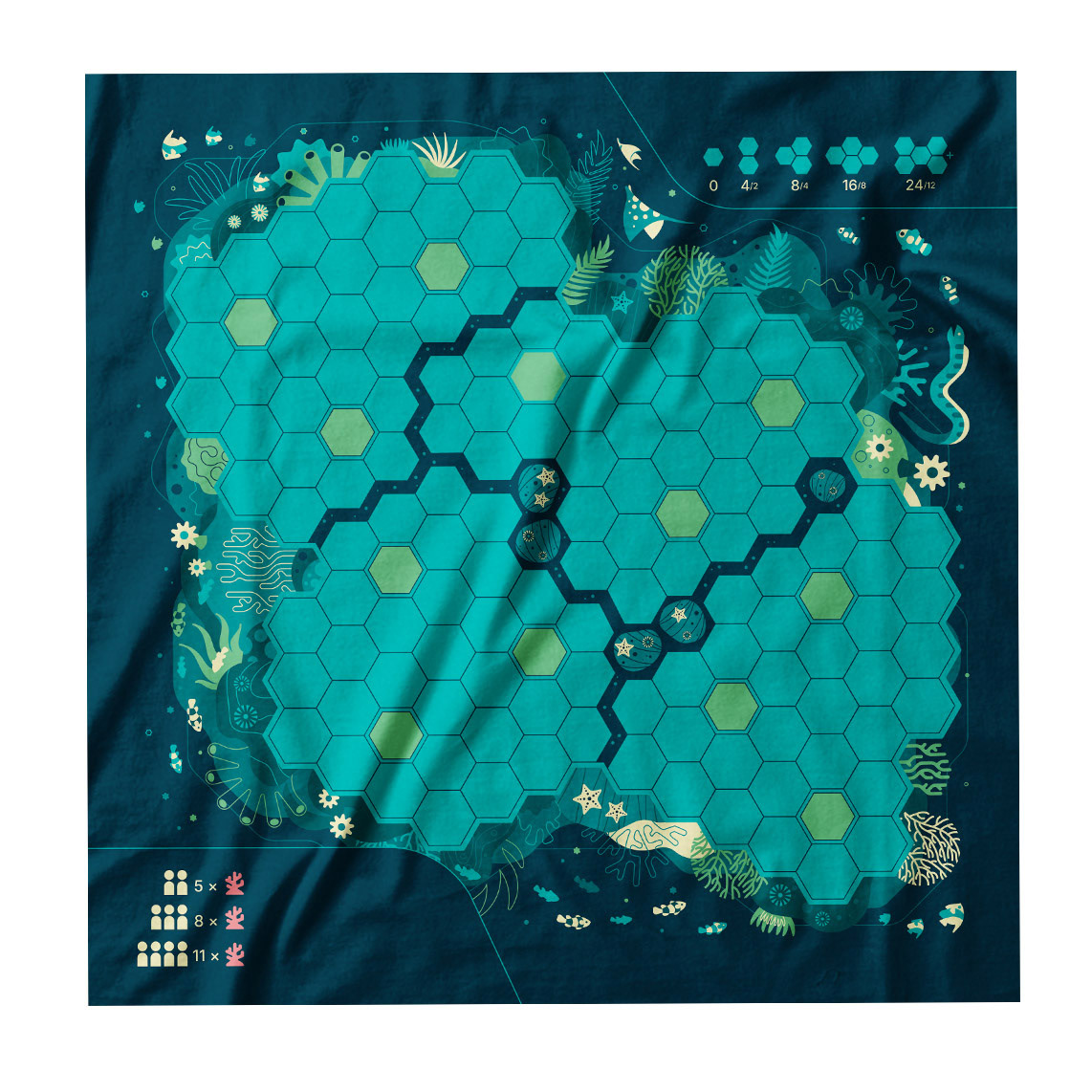
Seagrass required two fabric play-mats, the collapsable material part of its travel-friendly appeal. This unique grid pattern had to be both visually clear to ensure easy gameplay, as well as have an enticing aesthetic that would print well on fabric. I mirrored several illustrations from the cover, and executed it in a clean vector style.
Final Result
Seagrass came with the additional responsibility of print production and prepress. I ensured all products were properly set up to the manufacturer's standards. This included pristine print files, Pantone colour guides, and clean manufacturing spec sheets to ensure the final product was ready for both Kickstarter and retail store shelves.
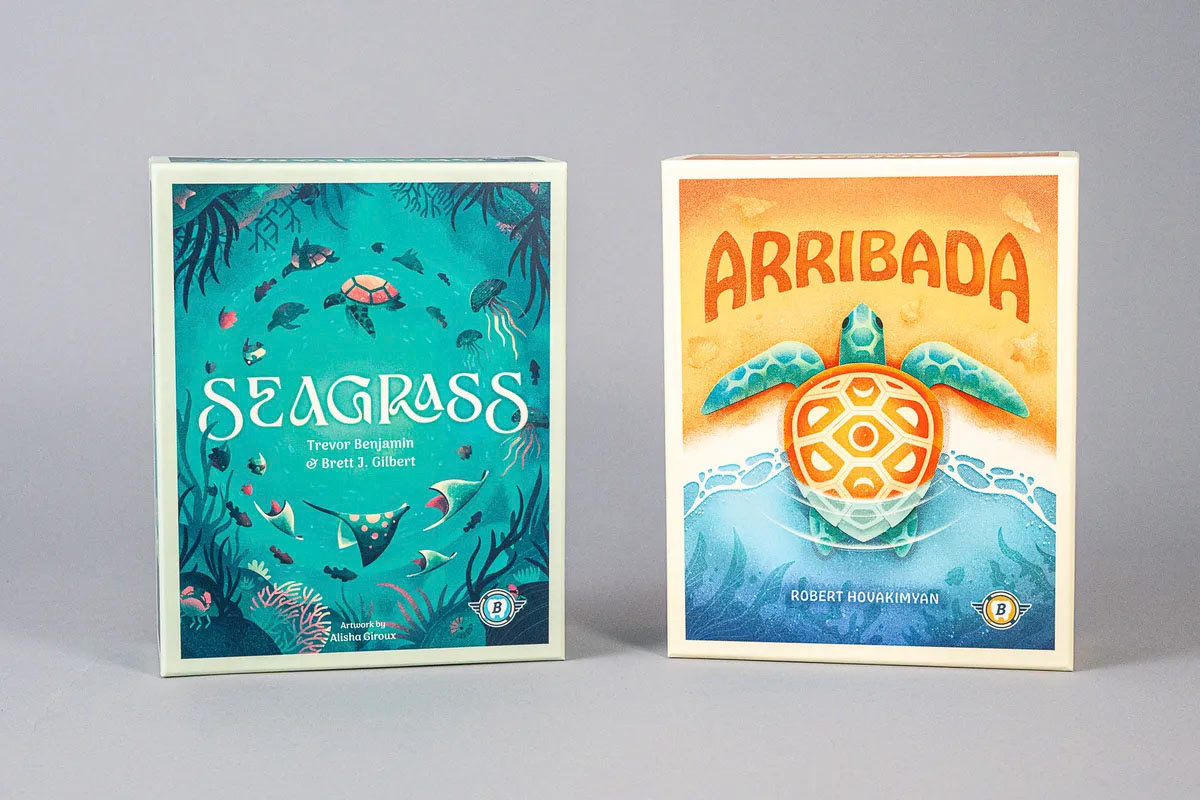
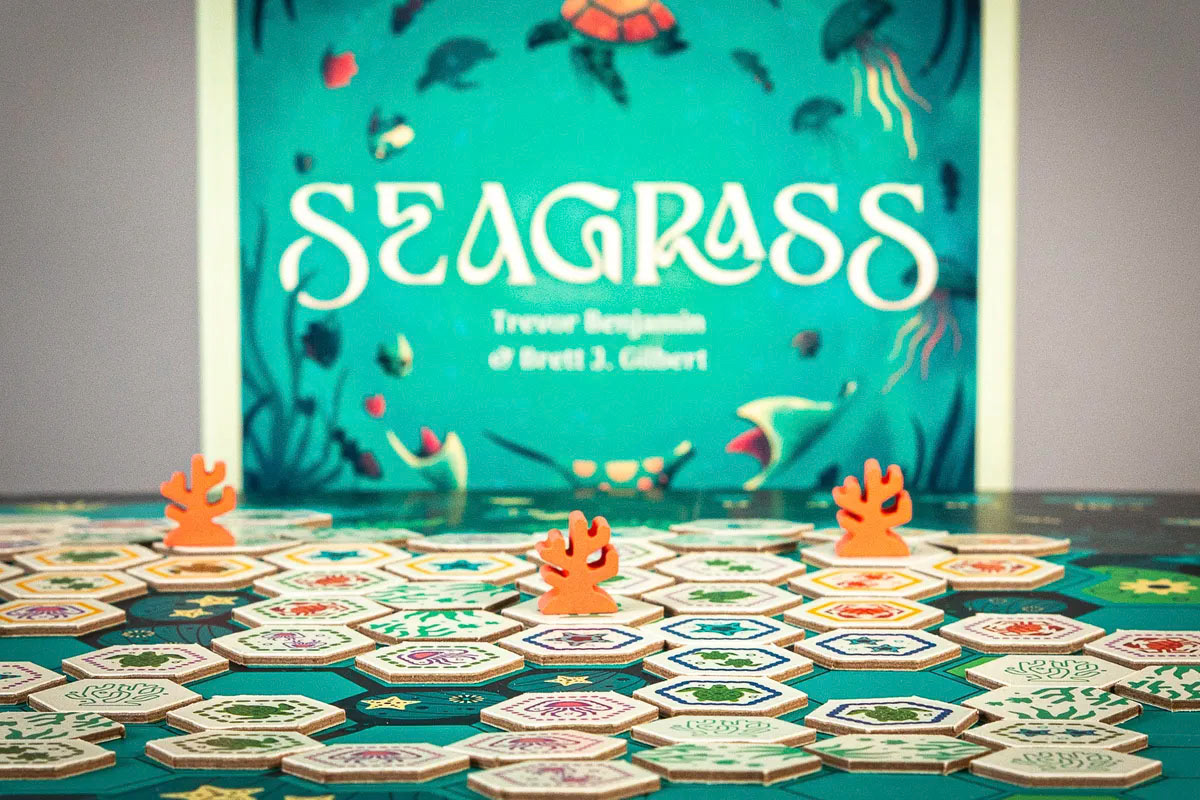
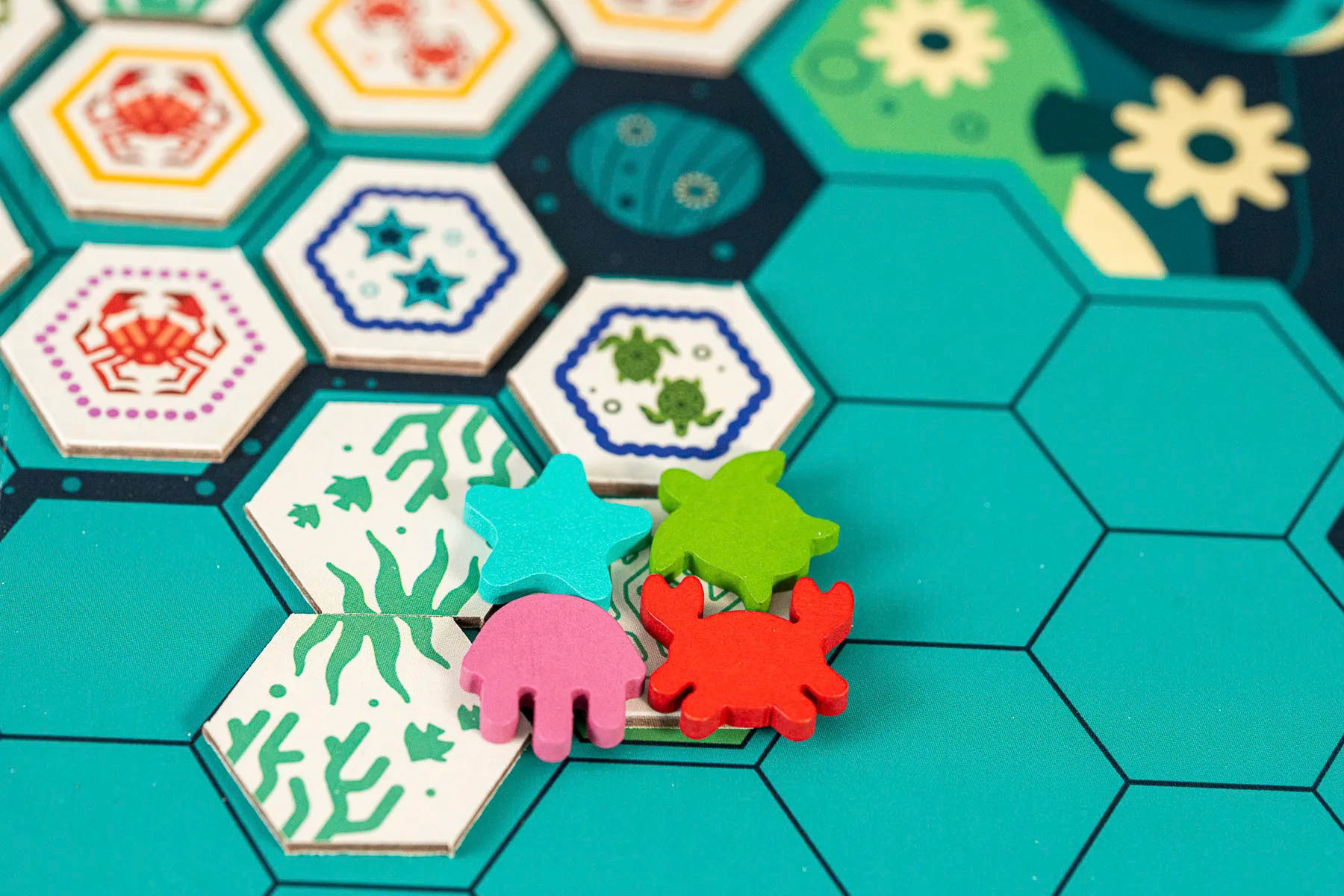
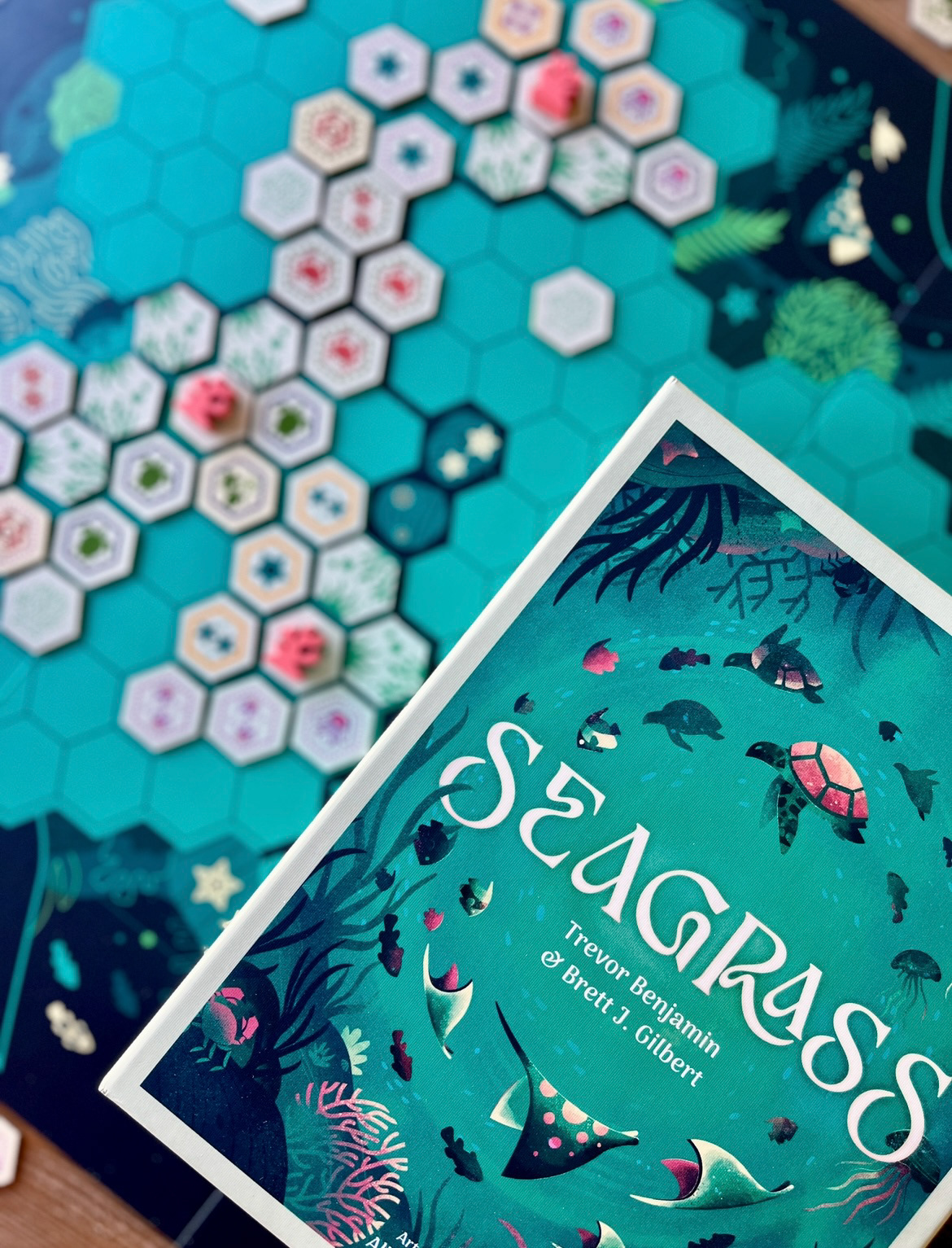
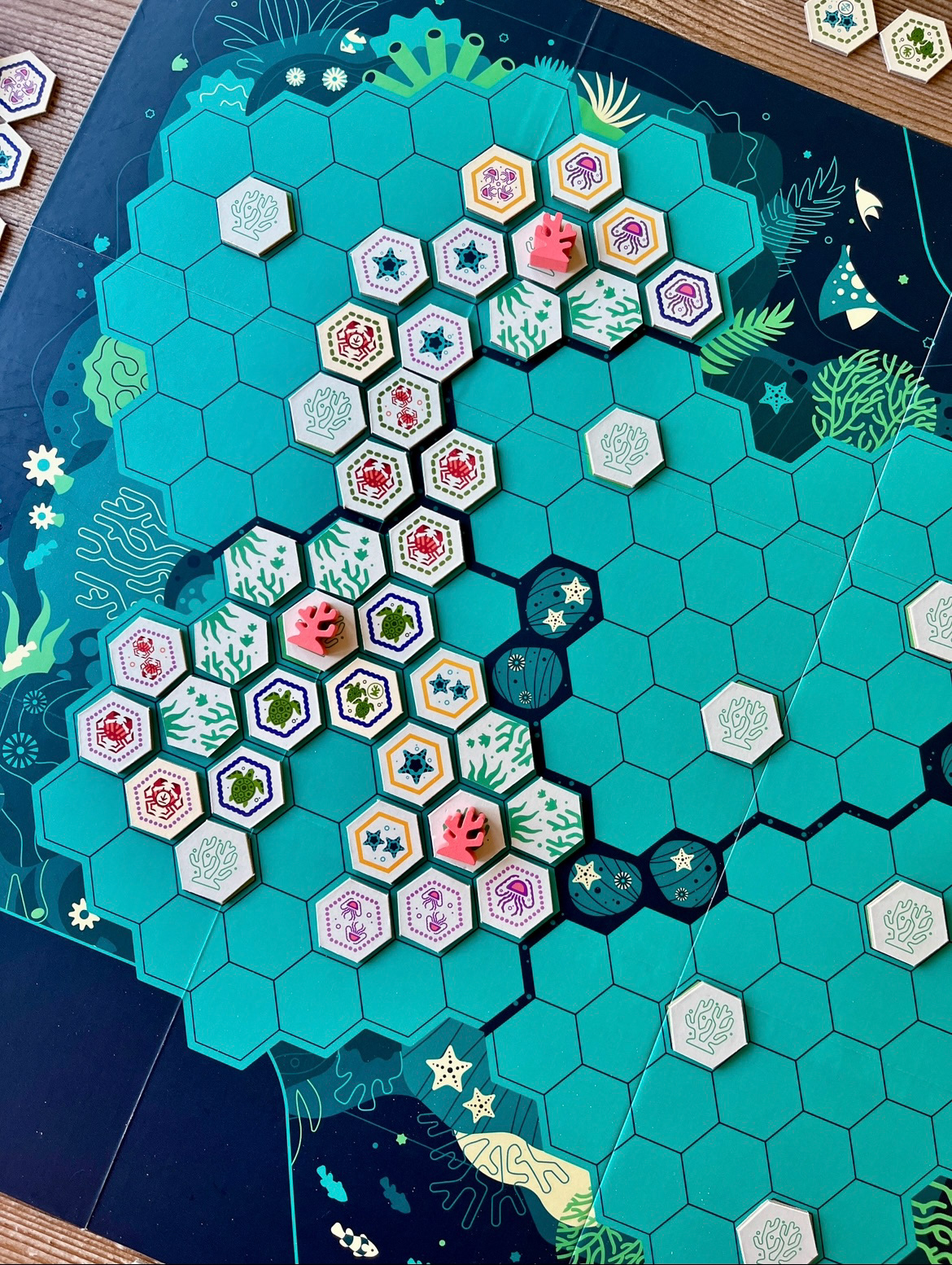
Image above shows the early prototype tiles before the finalized ones went into production. Photo credit Nick Murray and "All For One Games"
All of my projects are entirely AI-free. I do not believe in its usage, both creatively and morally. All work you see is 100% human-made.